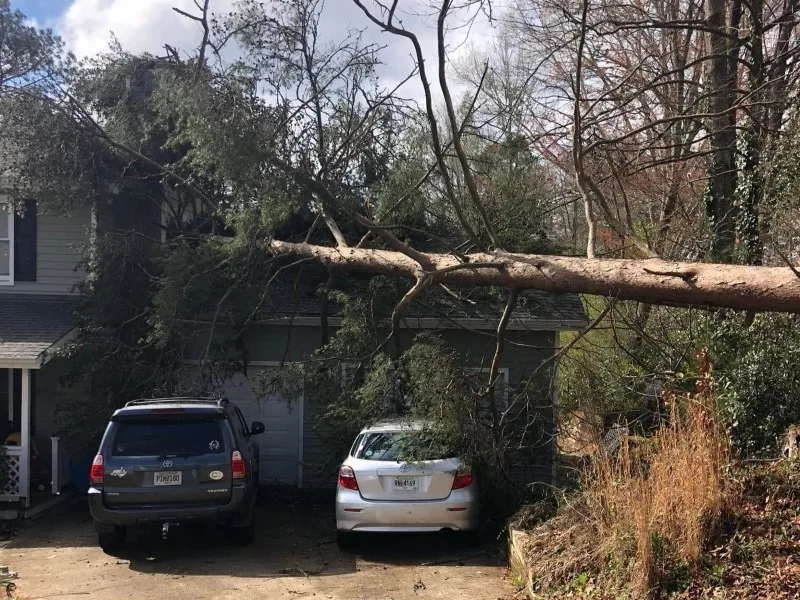
A storm damaged tree can turn a calm yard into a risky place. In North Georgia, wind, rain, and ice can change fast and leave a mess behind.
Branches may hang, trunks may split, and roots may lift from soaked ground. It helps to know safe first steps before you act.
A clear plan keeps people safe and helps protect your home. Right after a storm, your first goal is safety. Do a quick headcount and make sure everyone is okay.
Keep kids and pets indoors until you check the yard from a distance. Look out windows first and scan for hazards in a slow and steady way. Do not hurry outside if you see wires or broken poles.
Electricity is a silent danger after storms. If you suspect a live line, stay well back and do not touch anything nearby. Call your electric utility right away and wait for them to secure the site.
If you can go outside safely, move with care and do not stand under damaged limbs. Take wide paths around trees, and use a flashlight at night. Wear closed shoes and eye protection if you have it on hand.
Do not climb on anything or use ladders near broken limbs. Start to note what you see so you can remember later. Take clear photos from more than one angle if it is safe to do so.
Write down the date, time, and weather conditions you recall. Small details can help when you talk with a qualified arborist. Keep your focus on people first, then property.
A tree can be fixed or removed later, but injuries are harder to heal. Tape off unsafe spots if you can reach them safely. A few cones or a rope barrier can help guide others away.
Storm stress can make choices feel hard. Take each step slowly and breathe.
Do only what is safe and simple on your own. Leave complex work to trained crews with the right skills and tools.
First Steps for a Storm Damaged Tree
Begin with a slow look from a safe distance. Check if the tree is leaning more than before or if the soil looks raised. If the tree is on a structure, do not enter that area.
Wait until a building pro checks the space. Mark off the area around the damage so people do not wander in. Use cones, flags, or tape if you have them at home.
If roads are blocked, do not try to move large limbs yourself. Heavy wood can shift fast and cause injury. Document what you see with photos and simple notes.
Include views of the base, trunk, and canopy. This helps with a later tree storm damage assessment by a trained expert. It also helps you remember how the damage looked right after the storm tree removal planning.
How to Check for Immediate Safety Risks
Look for hazards you can spot without getting close. Signs include fresh cracks, torn bark, and broken limbs hanging in the canopy. Check the ground near the trunk for lifted roots or mounded soil.
That can mean the root plate is shifting. Listen for creaks, pops, or snapping sounds while you observe. Movement or sounds can mean the tree is unstable.
Do not stand uphill from a leaning tree on a slope. Keep a path open so you can step back fast if needed. Never stand under a hung-up branch.
These branches can drop at any time without a warning sound. Do not pull on them with ropes or tools. Wait for trained help that can manage overhead hazards safely.
Tree Storm Damage Assessment Basics
A calm, step-by-step look can show what may be saved. Start at the base and look up to the crown. Check for trunk cracks, crushed bark, and splits that run deep.
Deep trunk wounds often mean poor recovery odds. Next, scan the main limbs and the top leader. A broken leader can weaken the tree for years.
Minor limb breaks with clean cuts are often less serious. Twisted breaks and long tears are more likely to invite decay. Small wounds that leave most of the crown intact may be manageable.
Severe breaks, a split trunk, or lifted roots can create a property hazard. If you see these, keep a wide safety zone around the tree. Seek a formal assessment before anyone lingers near it.
What to Do With a Fallen Tree on Property
If you have a fallen tree on property, keep people away from the fall zone. The trunk can roll, and limbs can shift and snap. If the tree hit your home, avoid the area until a building pro checks for structural issues.
Do not climb on the roof to look. If the tree blocks your driveway, plan another way out if possible. Do not try to cut or drag a heavy trunk.
Even a small shift can trap hands or feet. Mark the area so others do not attempt a risky move tree care service options. If the tree rests on a fence or shed, do not try to brace it.
Makeshift supports can fail without warning and add risk. Take photos from a safe spot and note any changes you see. Wait for trained help to stabilize and clear the scene.
When Branches Are Hung Up or Split
Hung-up branches can fall without warning and cause serious harm. The University of Georgia Extension warns that high winds and ice can break branches, snap trunks, and even lift roots from the ground UGA Extension’s storm-damage guidance. It notes that hung-up branches may drop at any time.
Stay clear of the space under and around them. Split branches with long tears are weak points. They can lead to decay and more breakage later.
Do not try to shake, pull, or cut damaged limbs on your own. Vibration and tension can release stored energy and cause sudden movement. If a branch is stuck over a walkway or door, block that path.
Post a simple sign and guide people to another route. Do not park cars under the damaged spot. Wait for trained crews to bring it down with proper gear.
Options for Storm Damaged Tree Care and Recovery
Some trees with minor damage can recover with time and care. Clean, small wounds often seal over in a few growing seasons. Light, proper pruning can improve structure and reduce future risk.
Water during dry spells and keep mulch in a wide, shallow ring. Trees with major structural issues may not be safe to keep. A split trunk or crushed root zone can fail later.
In these cases, removal may be the safest option. A qualified arborist can explain choices and what to expect next. Watch the tree for signs of stress in the coming weeks.
Look for early leaf drop, wilting, or dieback at branch tips. Pests and rot can follow storm injuries. Early care helps the tree focus energy on healing and defense.
When to Call for Emergency Tree Removal
Some cases call for fast action to protect people and property. A tree on a home, a blocked exit, or a shifting root plate are urgent signs. A tree that is tangled with wires also needs quick attention.
Do not touch or move anything near the lines. Keep the area empty until help arrives. Close doors to rooms under damaged limbs if you can do so safely.
Move vehicles and outdoor items away from the hazard zone. Take new photos only if you can do it from a safe place. If a tree falls into a public road, alert local authorities.
They can coordinate traffic control and public safety. Utilities handle trees that involve power lines. Let them secure the scene before any other work begins.
Preparing Trees Before the Next Storm
Healthy trees handle wind and ice better than weak ones. Routine pruning of dead or rubbing limbs reduces failure points. Good pruning also builds strong branch attachments as a tree grows.
Do not top trees, since topping creates weak sprouts and decay. Strong roots start with good soil and water. Keep a wide mulch ring to protect roots from heat and mower damage.
Water during long dry spells so roots grow deep and strong. Avoid piling soil or mulch against the trunk. Have a simple storm plan for your yard.
Know which trees are close to homes, driveways, and play areas. Keep a few cones or tape on hand to mark hazards quickly. A plan makes the next storm easier to face.
Frequently Asked Questions
How do I know if a storm damaged tree can be saved?
In North Georgia, recovery depends on how much of the crown and trunk remain sound. Trinity Tree Service suggests looking for clean, small wounds and limited canopy loss. Deep trunk splits, lifted roots, and broken leaders are poor signs. A trained arborist can explain options based on the tree’s species and site.
Is it safe to move a fallen tree on my property?
Heavy wood can shift quickly, and hidden tension can snap limbs. In North Georgia, Trinity Tree Service advises keeping people away from the fall zone. Do not cut, drag, or climb on a trunk or limbs. Wait for trained crews with proper equipment to handle the load.
What are warning signs of hidden damage after high winds?
Look for cracked soil around the base, new leans, and fresh trunk splits. In North Georgia, Trinity Tree Service also notes creaking sounds and hanging branches as risk clues. Bark bulges and sudden gaps in the canopy can signal internal breaks. Keep a safe distance and arrange a professional evaluation.
When should I seek emergency tree removal near me?
If a tree is on a home, blocks an exit, or threatens a living space, act fast. In North Georgia, Trinity Tree Service considers those signs urgent. Trees involving power lines also need immediate utility response. Keep the area clear until the site is secured.
What should I do if a tree is on a power line?
Stay back and do not touch the tree, line, or anything nearby. In North Georgia, call your electric utility to report the hazard first. Trinity Tree Service advises waiting for the utility to confirm the area is safe. Only then should any tree work begin.
Trinity Tree Service Can Help in North Georgia
Storm damage is stressful, but you do not have to sort it out alone. Trinity Tree Service provides safe, careful help for assessments, pruning, and emergency tree removal across the region. Reach out today to get trusted guidance and prompt support contact Trinity Tree Service.