Tree Removal in Saratoga Springs, NY
Request a Free Estimate
Fill out the form and a member of our team will contact you promptly.
Professional Tree Removal for Homes and Properties in Saratoga Springs
A large tree growing close to your house, a damaged trunk, or a dead tree overlooking your driveway can raise serious questions about your property’s safety. Removing a tree takes more than cutting it down. The work requires understanding the tree’s condition, surrounding structures, access limitations, and the best approach for the site.
Trinity Tree Service approaches tree removal with careful planning, clear communication, and attention to the surrounding property. From unwanted trees to complicated removals, our goal is to define the work and choose methods that fit the situation.
If you’re considering tree removal in Saratoga Springs, NY, understanding the process can help you choose the right solution for your property.
When Is Professional Tree Removal Necessary?
Not every damaged or overgrown tree needs to be removed. In some cases, selective pruning can address a specific concern while preserving the tree. Other situations call for a closer look at whether removal is the better long-term option.
Common reasons property owners consider tree removal include:
Dead or severely declining trees
Extensive dieback, major decay, or structural deterioration may make retaining a tree impractical.
Hazardous trees
Cracked trunks, compromised branches, significant root problems, or other structural defects can justify professional evaluation.
Storm-damaged trees
Broken trunks, hanging limbs, and damaged branch unions may require removal rather than routine pruning.
Trees interfering with construction
Building additions, driveway work, and other property improvements sometimes require removing trees that cannot reasonably be preserved.
Unwanted or poorly located trees
A tree may outgrow its available space or create ongoing conflicts with buildings, utilities, and property use.
A professional evaluation can help determine whether removal is appropriate. Tree size alone does not establish that a tree is dangerous.
Hazardous Tree Removal Requires Careful Planning
Addressing Trees Near Homes and Structures
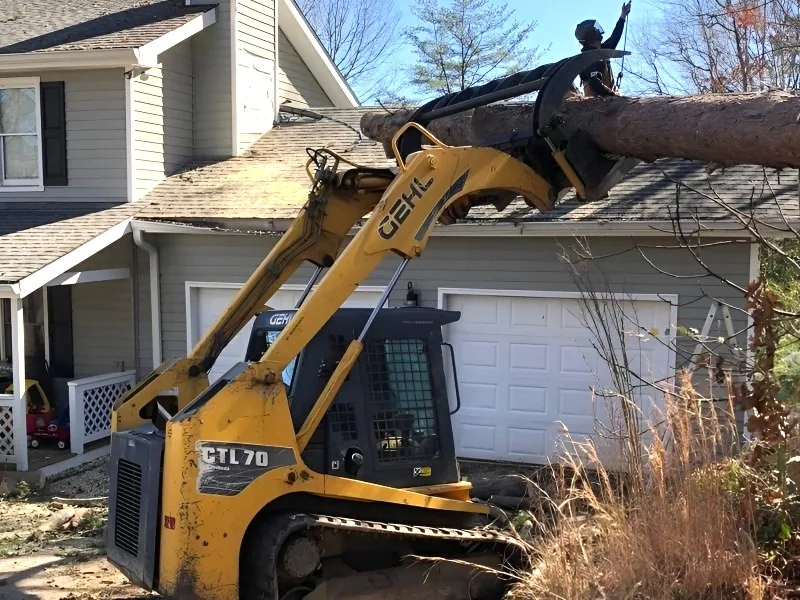
A tree standing in an open field presents different challenges from one growing between a house and detached garage. Limited work space, overhanging branches, fences, nearby trees, and access restrictions can influence the removal approach.
Hazardous tree removal often involves working with damaged or weakened wood. These conditions can affect how branches and trunk sections respond during removal.
Before beginning a complex project, the tree’s structure and surrounding work area must be considered together. The removal method should fit the conditions rather than follow a one-size-fits-all approach.
Removing Dead and Damaged Trees
Dead trees can become more difficult to work with as wood deteriorates. However, a tree with brown foliage or a bare canopy is not necessarily dead.
Seasonal leaf loss is normal for deciduous trees, particularly during colder months in upstate New York. Other symptoms may reflect stress, pests, disease, or root problems.
Signs worth investigating include extensive deadwood, significant trunk cracks, newly exposed roots, and visible changes in the tree’s stability.
Stay clear of unstable trees and hanging branches. Have a qualified professional evaluate the condition before deciding how the tree should be handled.
How Professional Tree Removal Works
1. Evaluate the Tree and Property
A thorough site review considers the tree’s size, condition, location, nearby structures, and the available space for equipment.
Access gates, driveways, landscaping, overhead lines, and ground conditions can also influence the plan.
2. Select a Suitable Removal Approach
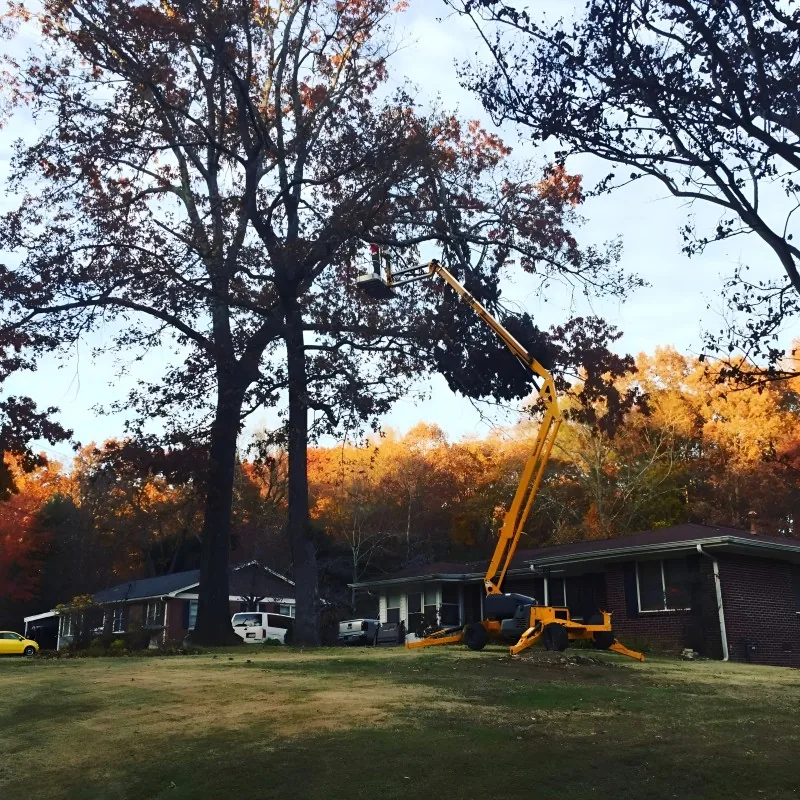
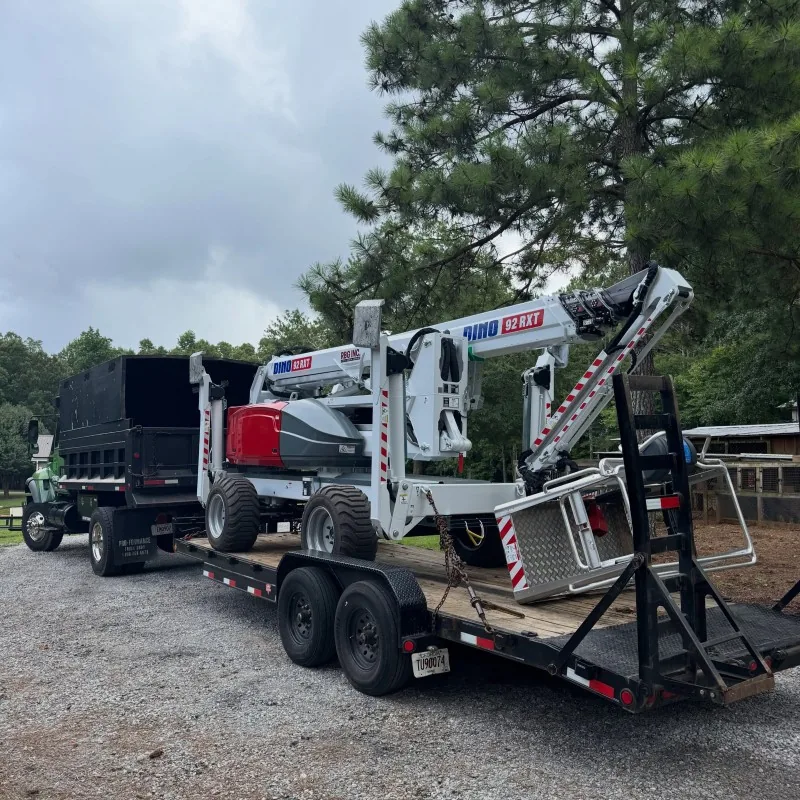
Some trees can be removed using conventional methods when sufficient space is available. Others require controlled sectional removal, professional climbing, rigging, specialized lifting equipment, or other methods appropriate to the site.
Crane-assisted tree removal may be considered for particularly complex projects, but it is not automatically necessary for every large tree.
The goal is to choose a method suited to the tree and its surroundings.
3. Clarify Debris Handling and Cleanup
Tree removal produces branches, trunk sections, wood chips, and other debris.
Before work begins, clarify whether the estimate includes removing wood, processing branches, stacking logs, or other cleanup tasks.
Discuss these details beforehand so the finished condition of the property matches the agreed scope.
4. Discuss Stump Grinding Separately
Removing a tree does not automatically eliminate its stump or underground roots.
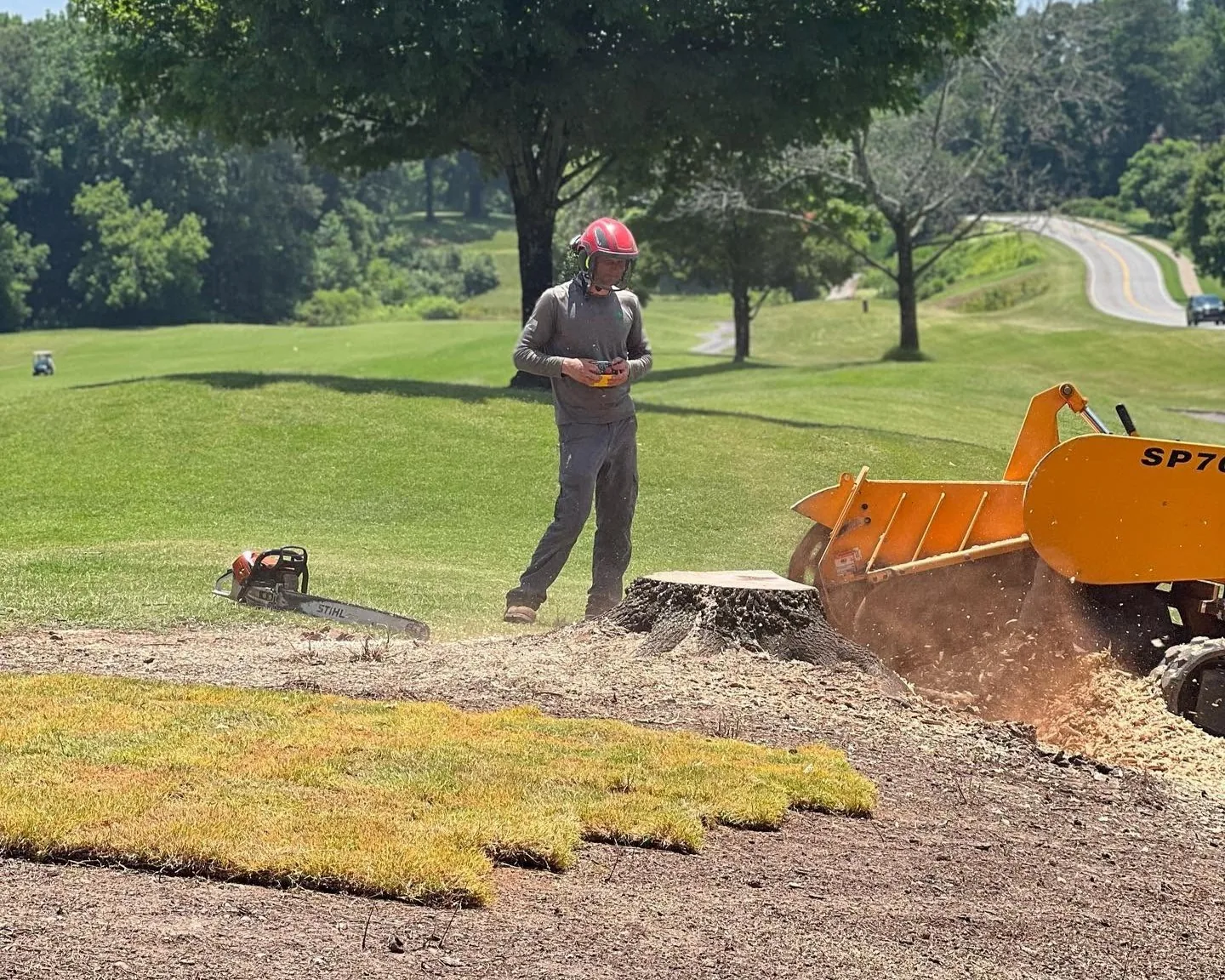
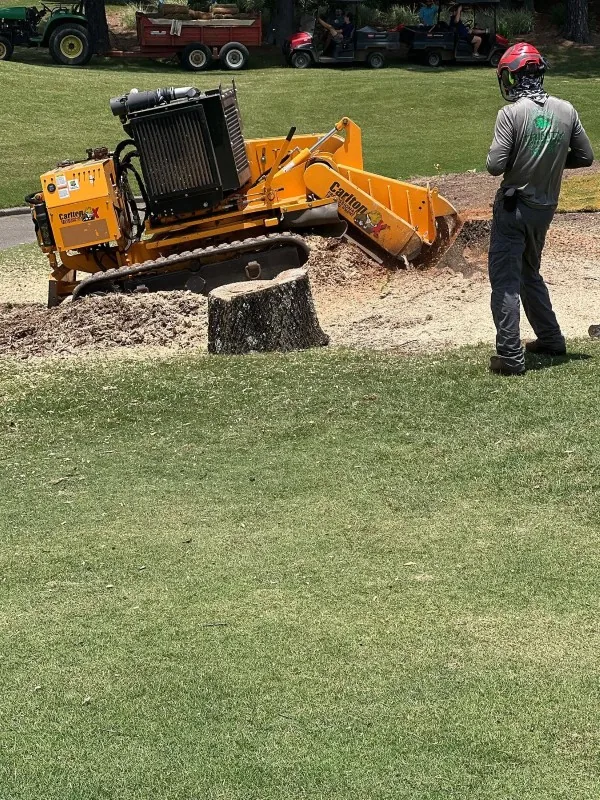
Stump grinding reduces the remaining stump to an agreed depth. Grinding does not normally remove the entire root system.
If you plan to install grass, create a planting bed, or improve the appearance of the area, explain your intended use before accepting the estimate.
What Affects Tree Removal Costs in Saratoga Springs?
Tree removal prices depend on more than tree height.
A smaller tree near a building can require more complicated work than a taller tree in an open yard. The amount of wood, tree condition, available access, equipment needs, and cleanup requirements all influence the project’s scope.
Common pricing considerations include:
- Tree height, trunk diameter, and branch spread.
- Structural condition and signs of deterioration.
- Proximity to houses, fences, garages, and other obstacles.
- Accessibility for workers and equipment.
- The complexity of lowering or handling tree sections.
- Wood disposal, debris handling, and optional stump grinding.
A detailed estimate should identify the work being proposed and explain what is included.
When comparing tree removal companies, look beyond the total price. Two quotes may describe different removal methods or cleanup arrangements.
Tree Removal Considerations for Saratoga Springs Properties
Saratoga Springs experiences seasonal conditions that can influence tree maintenance and removal planning.
Winter snow and ice can leave broken limbs suspended in tree canopies. Spring thaw and wet ground may affect equipment access, particularly on lawns and softer soils. Summer foliage can also make some structural problems harder to observe from the ground.
These conditions do not automatically mean a tree must be removed. They do make site-specific planning important.
Mature deciduous trees, evergreens, and ornamental trees can have different structural characteristics and maintenance needs. The appropriate recommendation depends on the individual tree rather than the season alone.
Properties with narrow driveways, established landscaping, or limited backyard access may also require additional equipment and debris-handling planning.

Why Clear Communication Matters During Tree Removal
Professional tree removal is a significant property project. Customers should understand what will be done before work begins.
Trinity Tree Service’s established approach emphasizes reviewing the site, defining the scope, and coordinating the crew’s work.
A well-defined removal plan gives property owners the opportunity to ask about access, equipment, wood handling, stump grinding, and the expected condition of the work area.
Clear expectations are particularly valuable when the tree is close to a home or when several services are being considered together.
Frequently Asked Questions About Tree Removal
How do I know if a tree needs to be removed?
Extensive decay, serious structural defects, major storm damage, or conflicts with planned construction may make removal appropriate. A professional assessment can help determine whether pruning, monitoring, or removal is suitable.
Can a tree be removed when it is close to my house?
Many close-quarters removals can be planned using controlled methods, but feasibility depends on the tree’s condition, surrounding structures, and equipment access. A site assessment is necessary to determine the approach.
Does tree removal include stump grinding?
Not necessarily. Tree removal and stump grinding are separate services unless the estimate specifically includes both.
Can storm-damaged trees be removed?
Storm-damaged trees may require professional removal when the trunk, major branches, or root system has been compromised. Keep away from hanging limbs and never approach a tree touching a power line.
How long does tree removal take?
The schedule depends on tree size, condition, available work space, removal complexity, and cleanup requirements. A contractor can provide a more useful estimate after reviewing the property.
Trust the Professionals at Trinity Tree Service
Discuss Your Tree Removal Project With Trinity Tree Service
A tree removal project deserves an approach based on the tree’s condition, property access, and the work required.
Trinity Tree Service emphasizes careful planning, organized crew communication, and clear expectations for its tree removal projects.
If you are considering hazardous tree removal, dead tree removal, or the removal of a large tree near your home, start by describing the tree and the property conditions.
Contact Trinity Tree Service to discuss your tree removal needs and confirm service availability for your location.